
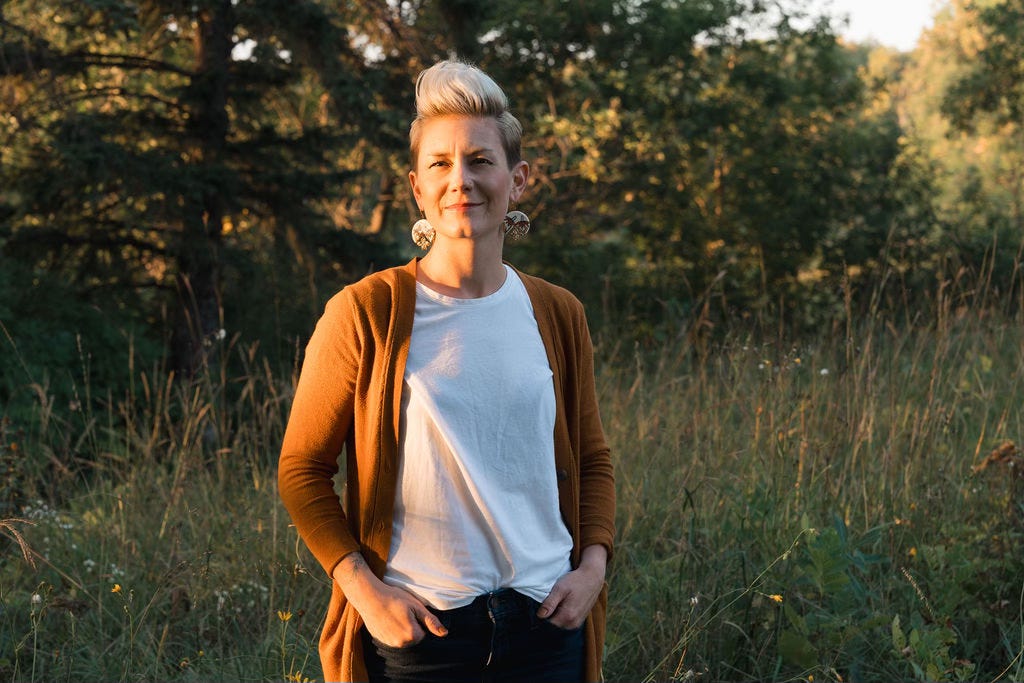
“Do you think it’s time?” my husband asked, standing in the kitchen.
“Time for what?” I replied. I’d been venting again.
“Time to be done and start your art business.” He was gentle but somber. The question reverberated in my mind, jolting my train of thought to a halt.
“What?” I said. Was he seriously asking me this? Was he asking me if I was ready to quit, to throw away the work I’d invested in so much?
I had been working in homeless and carceral health for almost eight years, a path that began with someone telling me, “You know, you’d make a great nurse” and (at least legally) ending with me bawling regularly in my bathroom releasing grief, shame, and guilt. I heard recently, “if you don’t make the choice, the choice makes you.” And that’s exactly what happened when I burned out so much I had to go a different way.
That different way? Maybe it was always the way, just winding around more than I ever imagined.
When I quit listening to my ego and started listening to the dreams that had always been, following the breadcrumb trail of what lit me up inside, I began a new way of being and moving in the world.
Cosmologies and Stories Told
I grew tired of people asking me if I’d read it yet. I had purchased it at the Minneapolis airport during a layover months prior but had put it off. To this day, I think I knew somehow this book would change me, and I wasn’t ready for the discomfort. And I just don’t care about trends.
The book was “Braiding Sweetgrass: Indigenous Wisdom, Scientific Knowledge, and the Teachings of Plants” by Dr. Robin Wall Kimmerer. In the first chapter, “Skywoman Falling,” Kimmerer introduces the Indigenous creation story of Skywoman falling from Skyworld. The animals of the lower depths catch her, and together, they form the earth from mud on a turtle’s back—Turtle Island. She dances in gratitude for their gifts, and she herself arrives with a handful of seeds and fruits from her world and the instruction: “Use your gifts and dreams for good.” She scatters them on the new ground, carefully tending each one, spreading abundance and medicine everywhere. Sweetgrass is the first to grow, a most sacred plant, the hair of Mother Earth.
This vision of co-creation, collaboration, and collective care contrasted starkly with the creation story I had been given of banishment from a garden for not following the ‘rules,’ left to subdue the earth to survive. By this time in my life, I had already composted the religious narratives I was raised with, but this stung. The stories we’re told shape our worldview, and our worldviews guide how we relate to each other and the earth. Follow the two paths: which leads to ecological and cultural sustainability and abundance? Dr. Kimmerer asks.
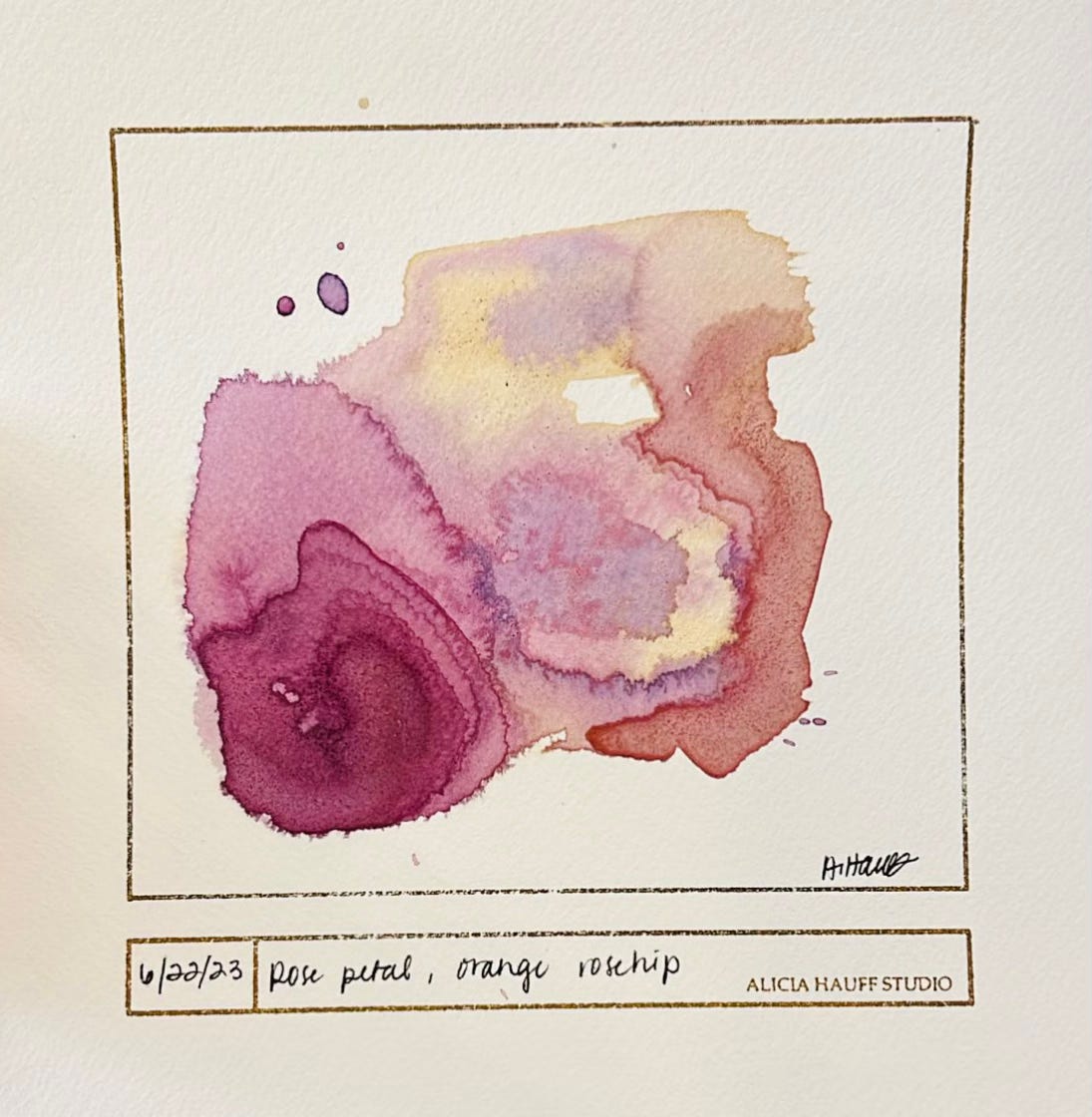
Wild ink sketch with roses from our garden with an unexpected female profile to the right—Skywoman?
When we have the courage to ask questions, to speak new storylines into being, or simply to ‘go back and look for what was lost,’ we begin to shape new ways of being and relating.
Walking a little further into this contrasted worldview is the Indigenous story of the Original Man: Nanabozho. He was created from the four sacred elements, part man and part spirit-being, the last being created. As with Skywoman, he was given instructions for how to move in the world: “Walk as though each step is a greeting to Mother Earth.” He realizes that “all the knowledge he needed in order to live was present in the land. His role was not to control or change the world as a human, but to learn from the world how to be human,” Kimmerer writes. Notice he is not instructed to subdue the earth and have dominion over all creatures.
He first travels to the East, the direction of knowledge, and meets sema, sacred tobacco. Here, he is given the responsibility of learning the names of all beings by observing how they lived. Notice that he does not go around naming other beings; he must discern the names they already have.
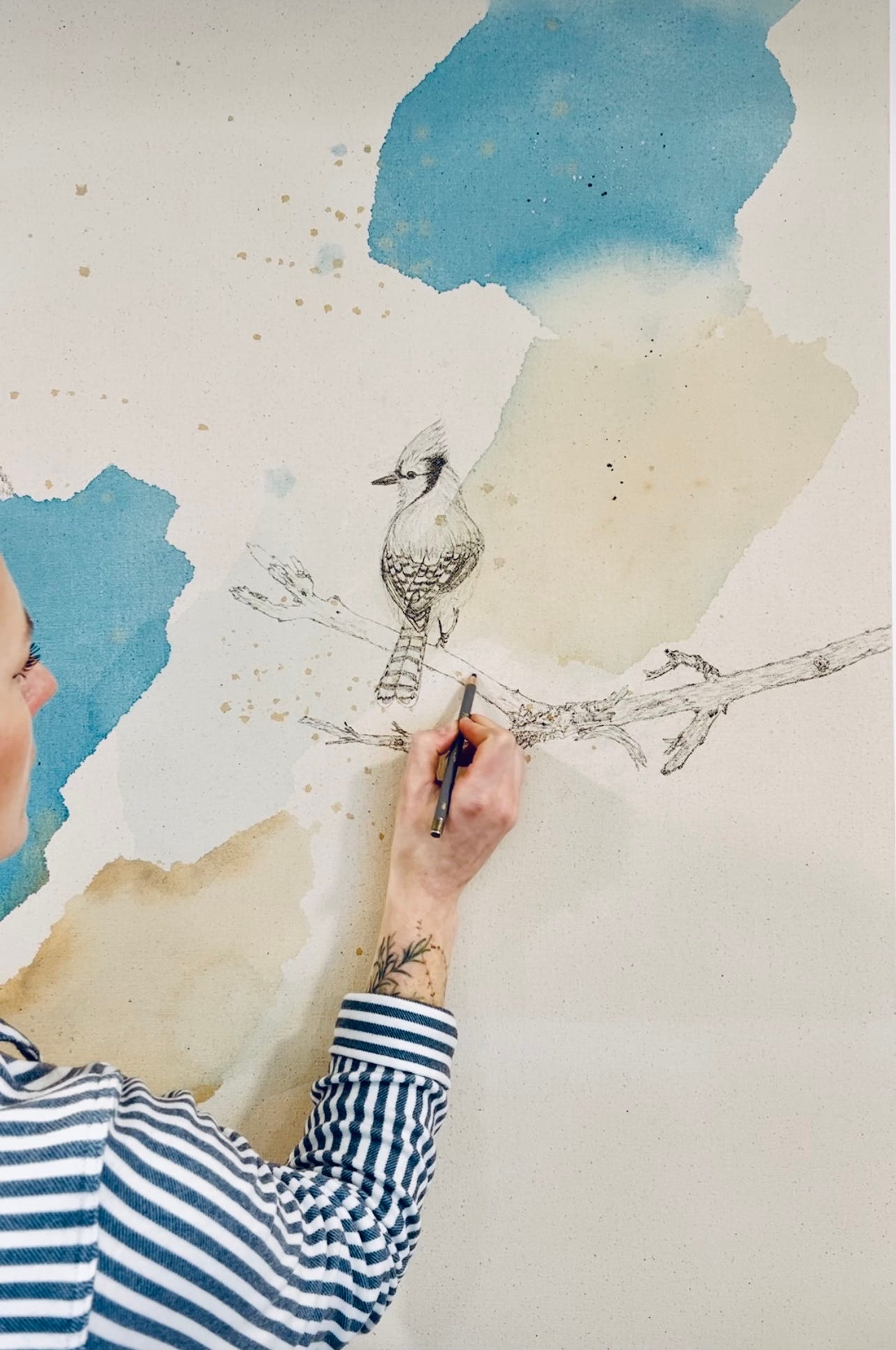
Drawing a Blue Jay in the studio this spring
As Nanabozho walks in each direction, learning lessons from sacred plant elders and animal people about how to live, he understands that each gift carries responsibility—bringing balance to the interconnected whole of Nature.
“By honoring the knowledge in the land, and caring for its keepers, we start to become Indigenous to place…to live as if this is the land that feeds you, as if these are the streams from which you drink, that build your body and fill your spirit…to know that your ancestors lie in this ground. Here you will give your gifts and meet your responsibilities…to take care of the land as if our lives and the lives of all our relatives depend on it. Because they do.” ~Dr. Kimmerer
With ‘Deer Ears and Owl Eyes’
If we desire to learn how to walk through the world differently, how do we do that today? How do we learn to walk as though each step is a greeting to Mother Earth?
I believe the answer lies in learning to listen and observe our more-than-human neighbors and elders over time.
After I left healthcare in the autumn of 2021, I spent another year coming home to myself and my creativity. I experimented with a variety of media, ideas, and techniques, often dissatisfied. But what did I circle back to? A practice of research, nurturing connection, and community care with attention to detail. My entire creative practice evolved to center relationship with the land I call home. All of 2023 was spent researching and creating paintings with native prairie wildflowers and their stories. As I spent time outside with them, I noticed the birds who rely on them…and inspiration took flight.
Research for my first bird series began January of this year with the book “What the Robin Knows” by Jon Young. The book is about what he calls “deep bird language,” learning various bird call types and behaviors, implications, and ultimately ‘reading’ your immediate environment. Modern technology (bird ID apps) partnered with a practice of opening my field of vision/noticing (owl eyes) and opening my aural field (deer ears) has led to both a more profound respect and sense of wonder for these neighbors.
For example, this summer, I was doing the dishes in the kitchen when I heard a Robin alarm calling loudly outside. I had to see what the fuss was about. I walk to the front yard to see a bird of prey perched on the edge of our roof (later identified as a Merlin, a petite falcon), Robin taking swoops at this bird (who was unbothered) while further down the rooftop a Mourning Dove sat, also unbothered. Witnessing this scenario and the apparent spectrum of tolerance for others was fascinating; I learned that day that Robin knows how to defend and protect fiercely; and that perhaps Mourning Dove was showing his gentility.

The lesson of Young’s book is that we often blunder through the world, not listening to our bird (and other) more-than-human relatives, often stuck in our heads. We can learn to slow down, open our ears and eyes to be fully present, especially outside, and mind our energy. Instead of “bird plowing” through, what if we paid attention to who else is present, noticing and acknowledging as we go, as Nanabozho would do? It is then that we can move from “collision to connection,” Young writes.
Of Lineage, Place, and Time: Re-Rooting
I remember it clearly. I was standing in my living room midday some time in the summer of 2021. I was in a state of emotional overwhelm, navigating a pandemic, social chaos, and what my place was in all of it. Then, as though right next to me, I heard someone say, “You have to *DO* THE WORK!” No one was physically around me, but somehow I sensed this voice was coming from a well-meaning ancestor or guide who knew I needed a kick in the pants. “Buck up, it’s time to do some work that we all need.”
Not long after that kick in the pants, I was introduced to the work they were talking about: ancestral medicine. Dr. Daniel Foor, author of “Ancestral Medicine: Rituals for Personal and Family Healing,” writes:
-
Consciousness continues after death.
-
Not all of the dead are equally well.
-
The living and the dead can communicate.
-
The living and the dead can strongly affect one another.
Many cultures have practices of ancestral reverence and connection, and factors of religious/spiritual views, personal experience, and instinctual belief shape how we connect. We can learn to cultivate relationships with our well ancestors, understand the burdens and blessings, embody and share those blessings, and transmute the burdens/help heal what needs healing.
As I began ancestral research and connection, something shifted deeply for me. I saw harmful patterns and learned what I can do to help without becoming codependent. I saw the ingenuity, humor, and deep love for family. I saw the stubbornness and spiritual practices that kept them alive, and have been able to say, “we can lay that down now. I am changing some things for us.”
Re-rooting asks: Who are my ancestors? Where did they come from, what were they dealing with? Why did they do that, and how can I do it differently or similarly? Even from a practical standpoint, genetics are ‘stored environment;’ what am I in for health-wise?
Re-rooting is a process of integrating the ancient with the modern; of trusting our bodily wisdom as a guide (we are ‘walking shrines to our ancestors,’ after all, Dr. Foor writes); and honoring where we’ve come from with courage for where we’re heading. Ancestral medicine has inspired a journey of understanding ancient Northern European beliefs and traditions, ways of relating to the earth that might inform my life ways today.
This is not a “love and light” spiritual bypassing or New Age trend. This is getting down into the dirt, unearthing what needs to be held, grieved, understood, and acknowledged. This is walking in the world knowing you are the face of your ancestors, feeling resourced and grounded in connection with them. It is working towards mutual understanding, healthy relationships with living family and community, and celebrating life in all forms. It is extending that relationship to ancestors of place, who may be more-than-human. And it is medicine we need right now.
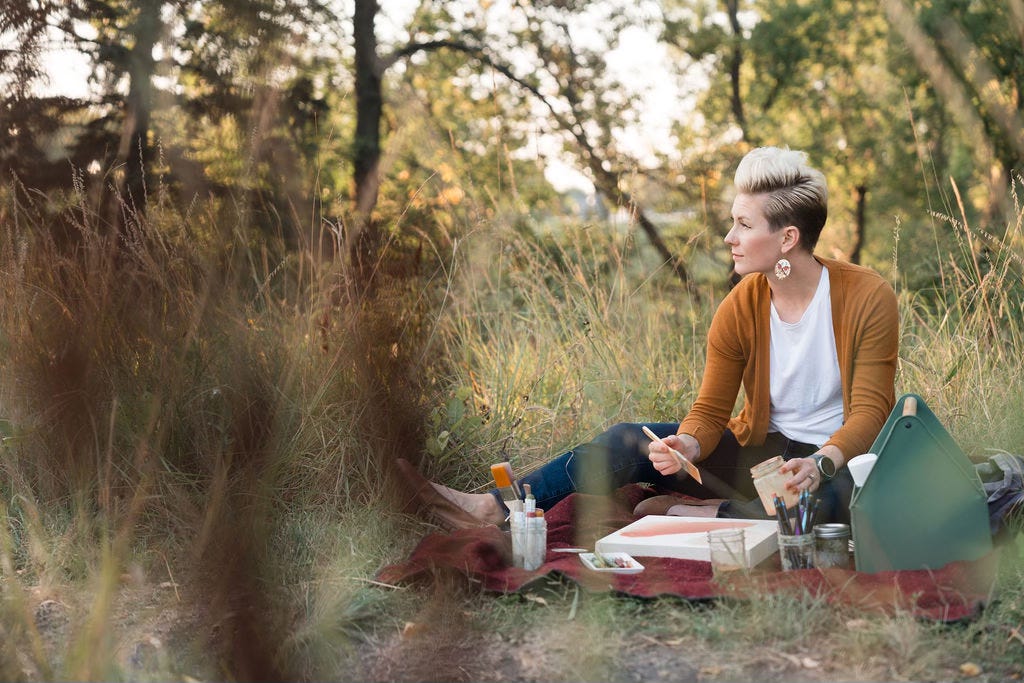
Bringing it Home
It took me some time to see that all of the skills, time, and lessons I learned while practicing nursing are all still utilized today. Nothing is wasted; everything has a purpose and I still care, deeply.
Creativity, healing, and relationship have always been a part of what I do. The outward expression of that continues to evolve. Our sense of place, home, and community determines how we move in the world—and I want to continue exploring this through creative inquiry, sharing what comes through. Our collective root cellars need some love.
As I research, create, and share here, I hope you feel welcome to share your thoughts and experience.


Reader Interactions