
Alicia Hauff Studio
Mixed Media Fine Artist in Fargo, ND
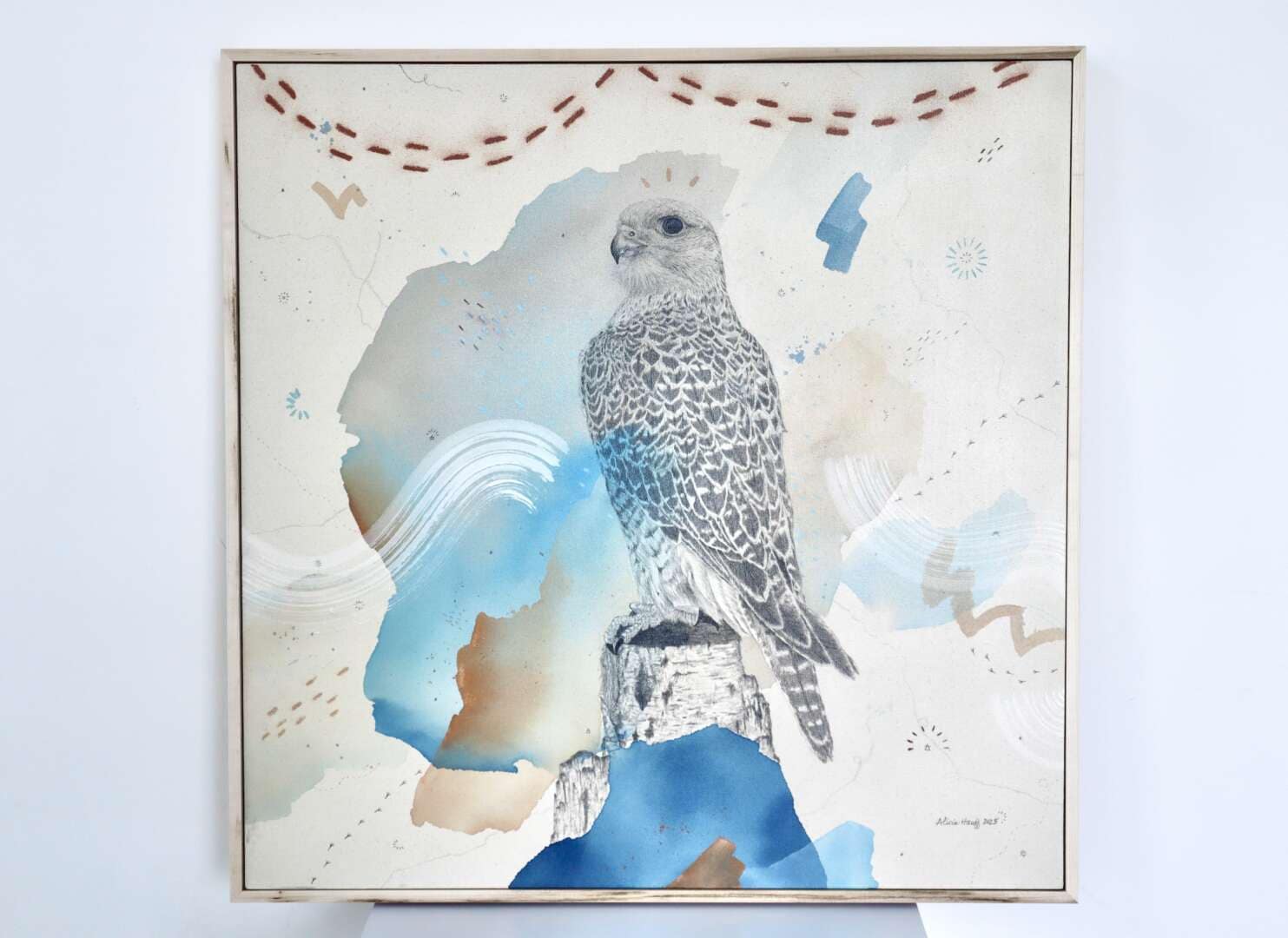
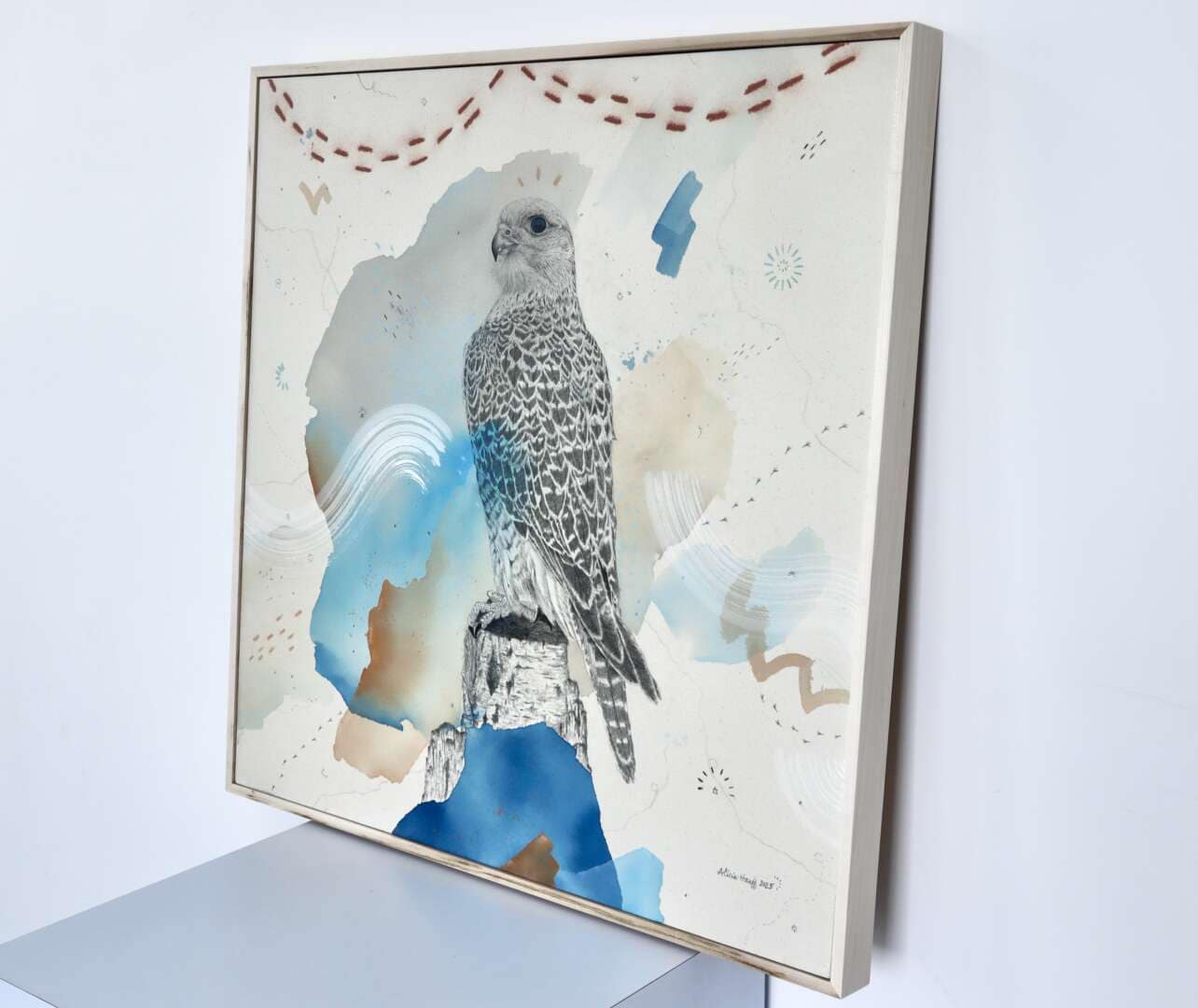
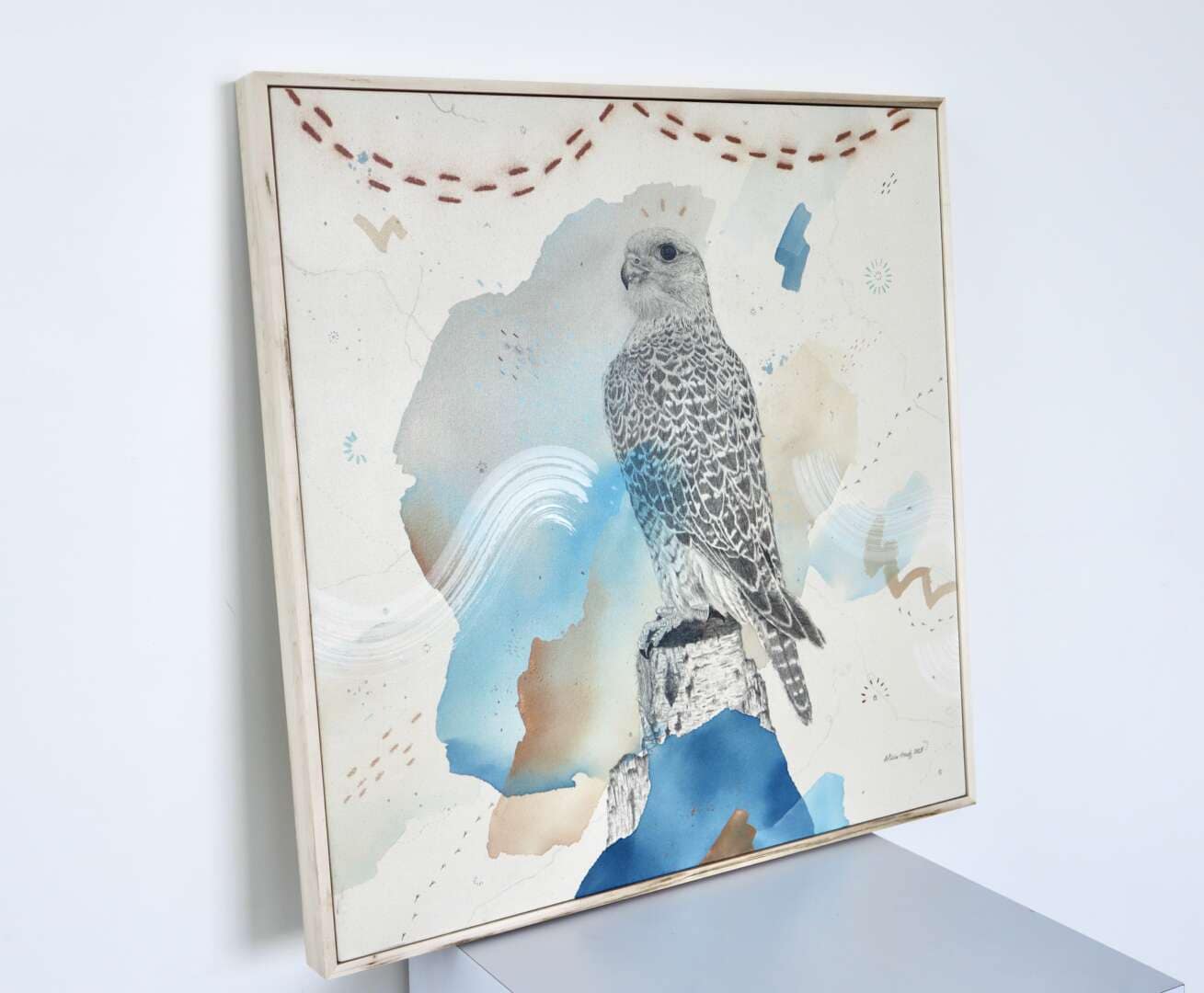
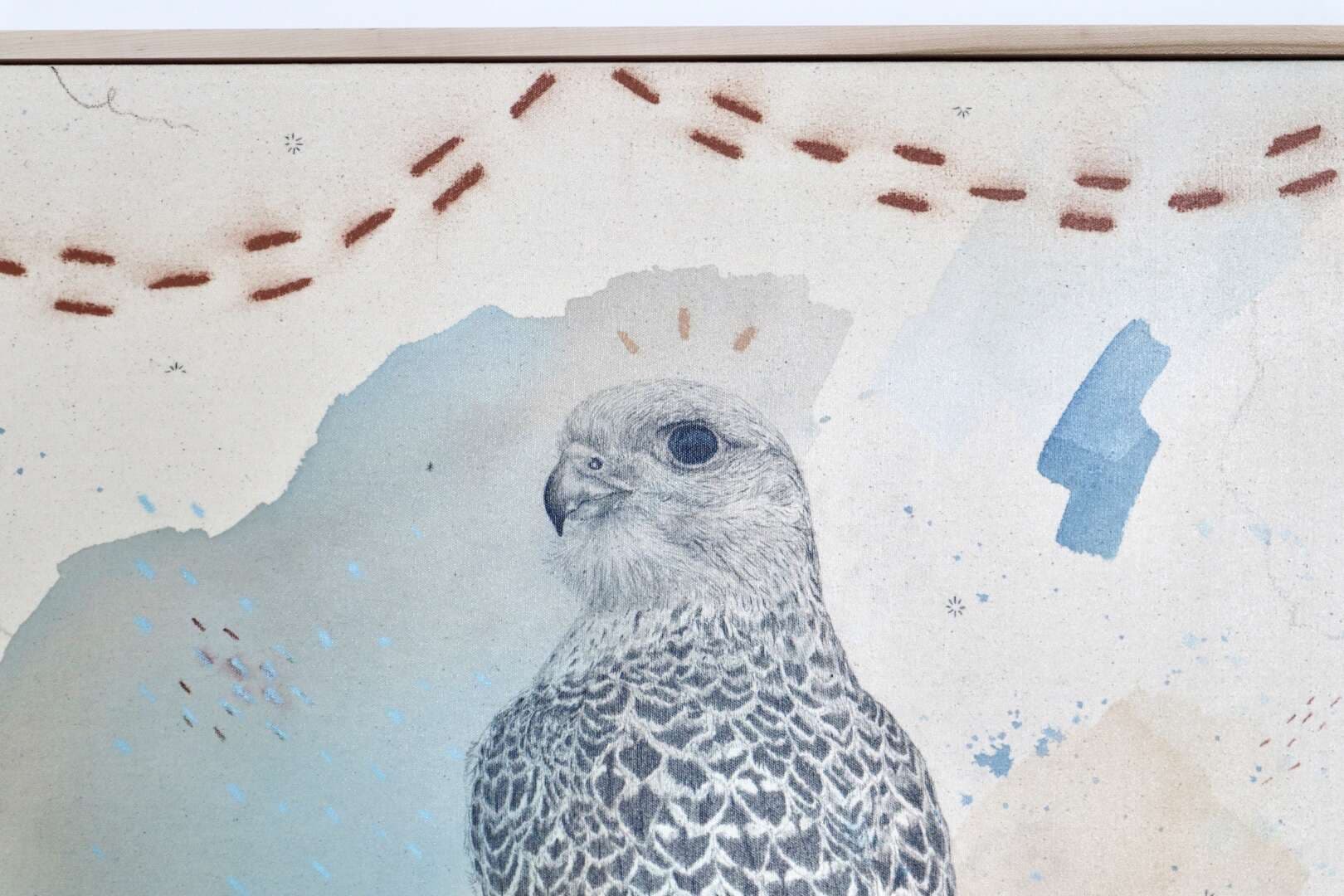
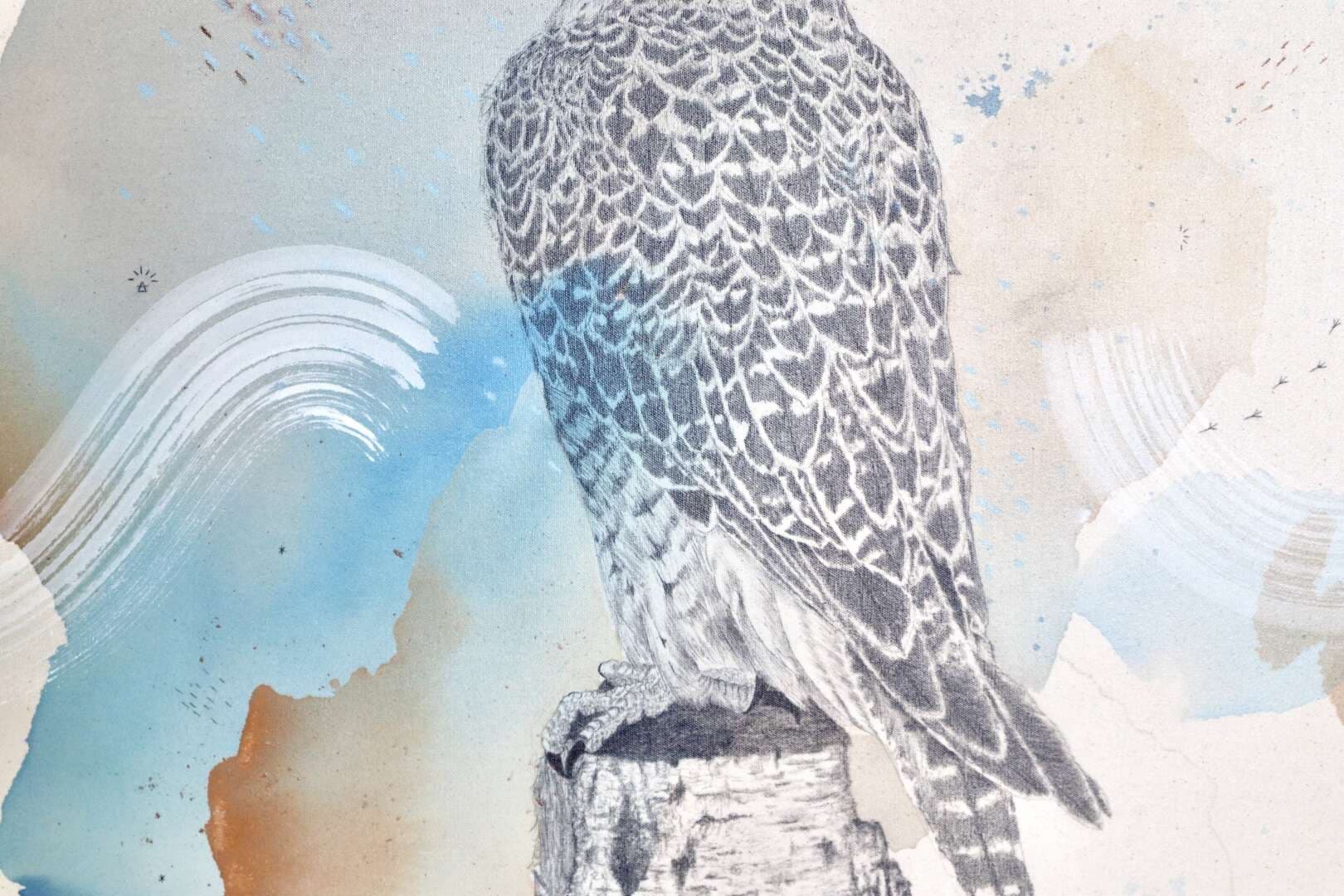
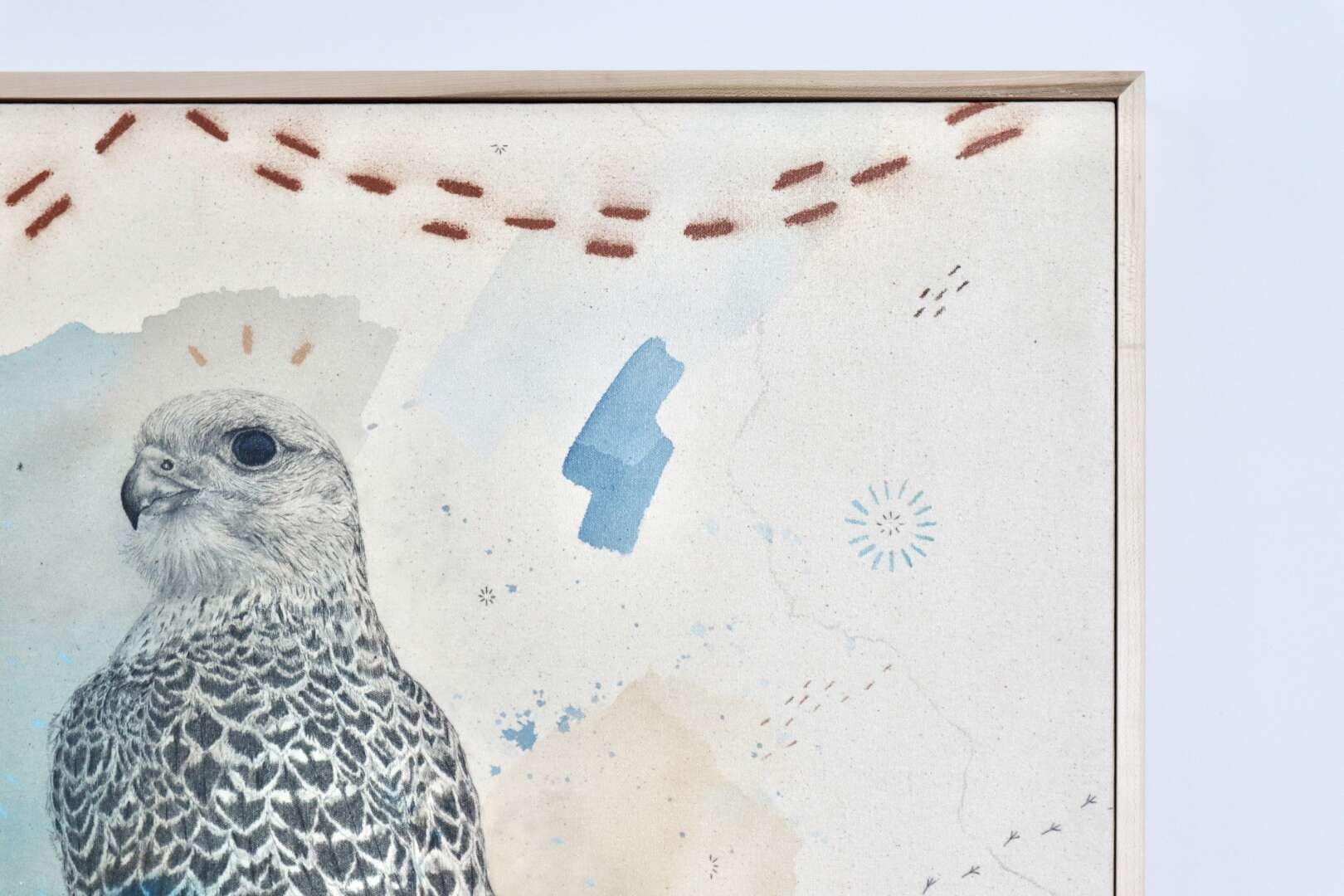
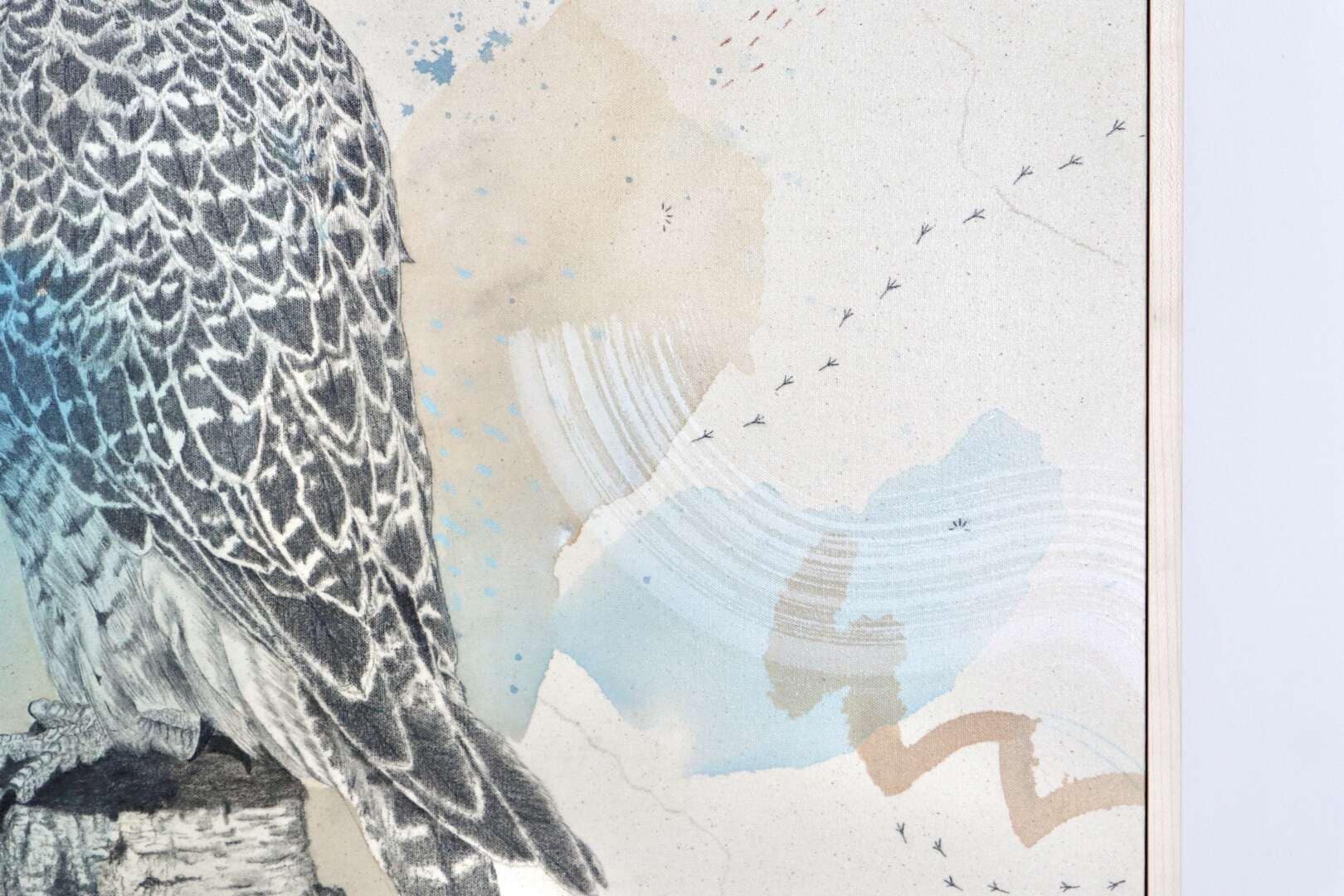
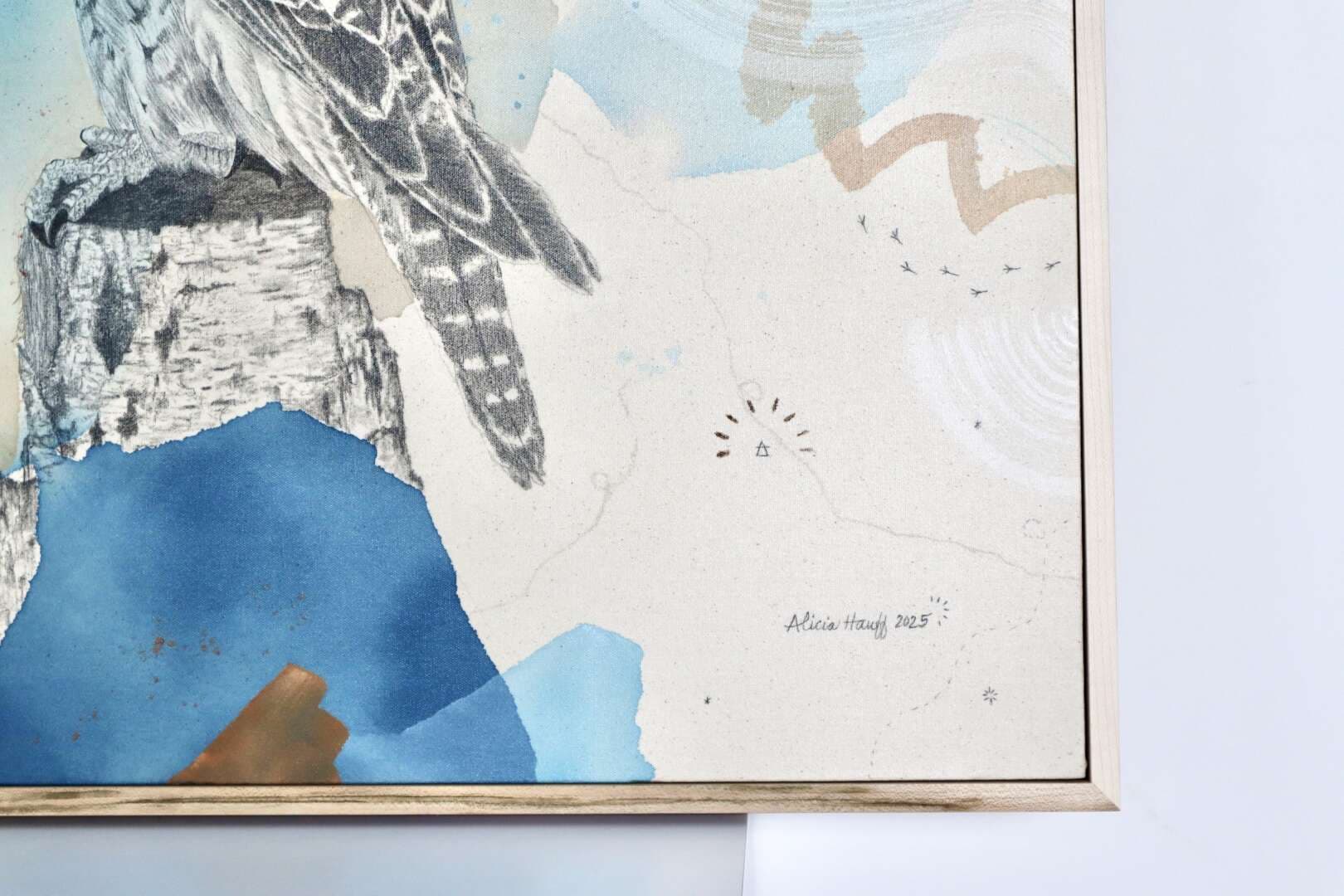
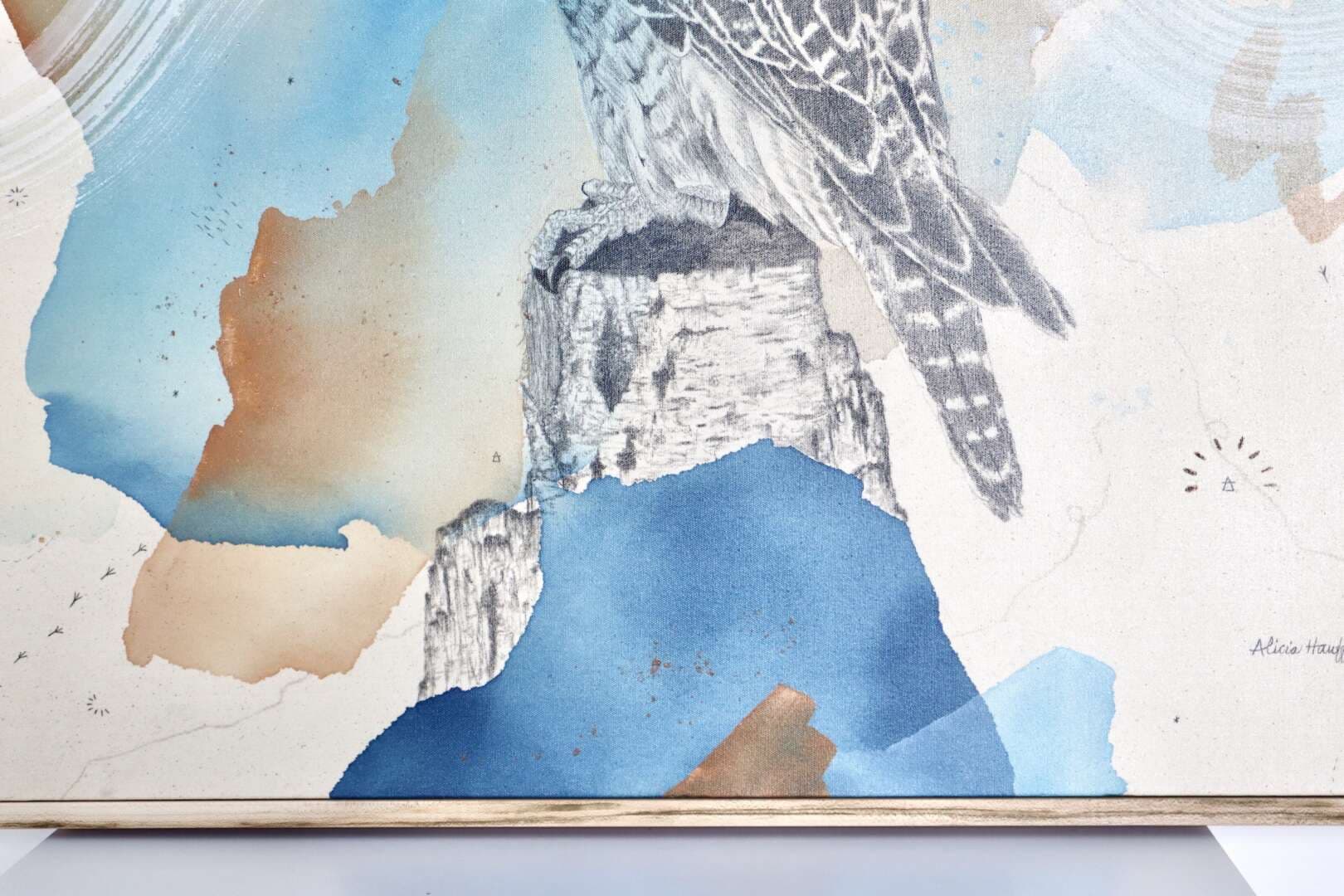

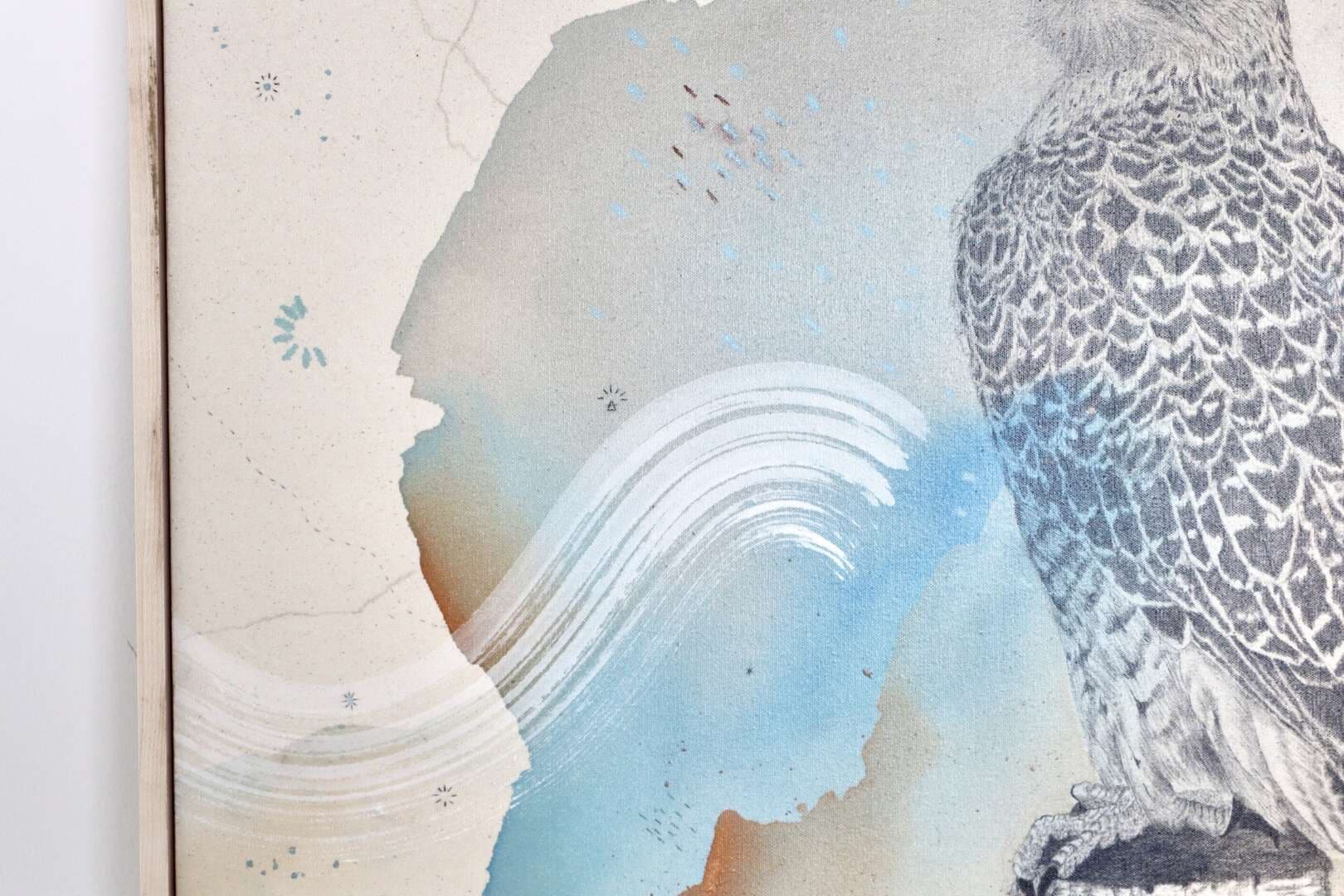
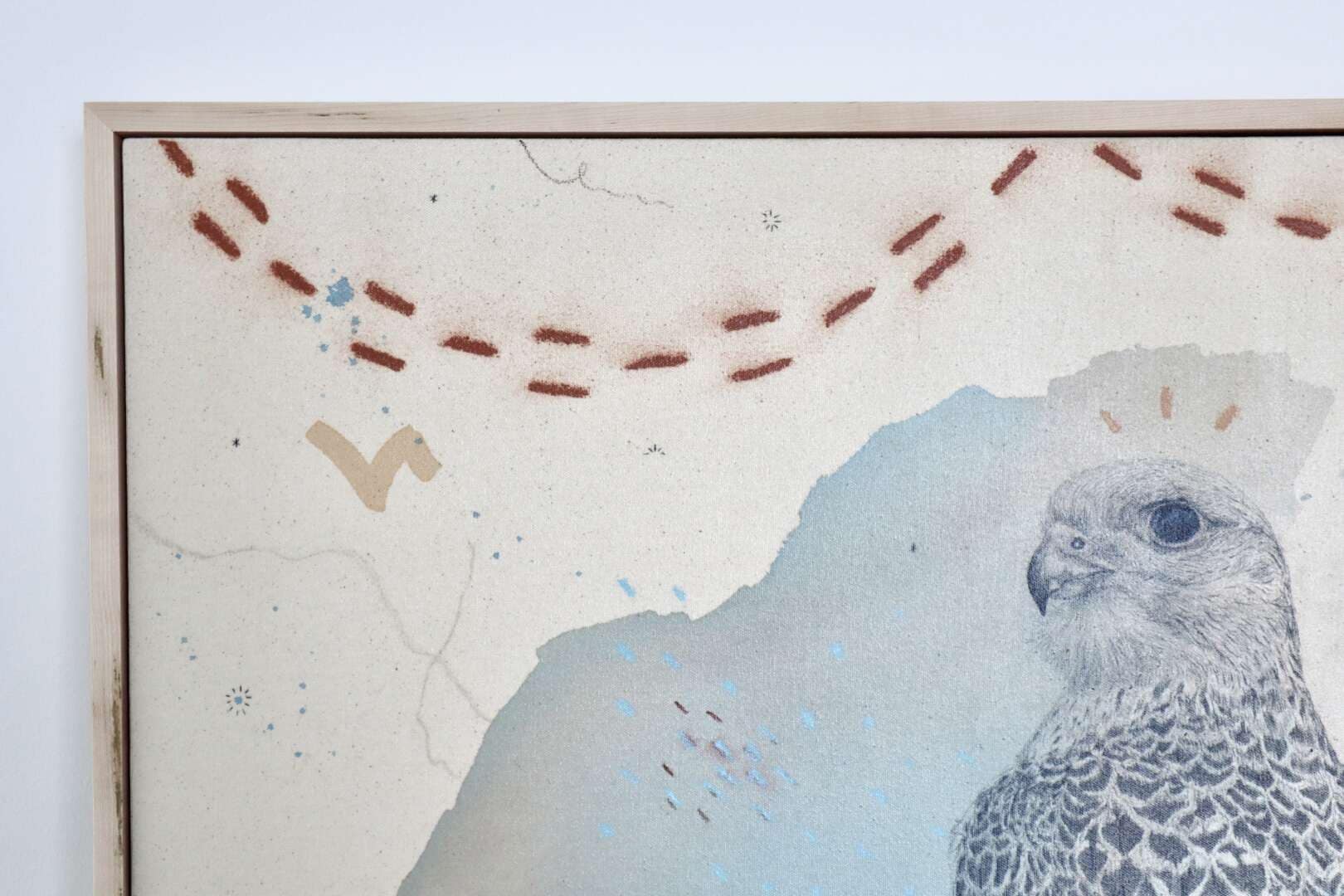
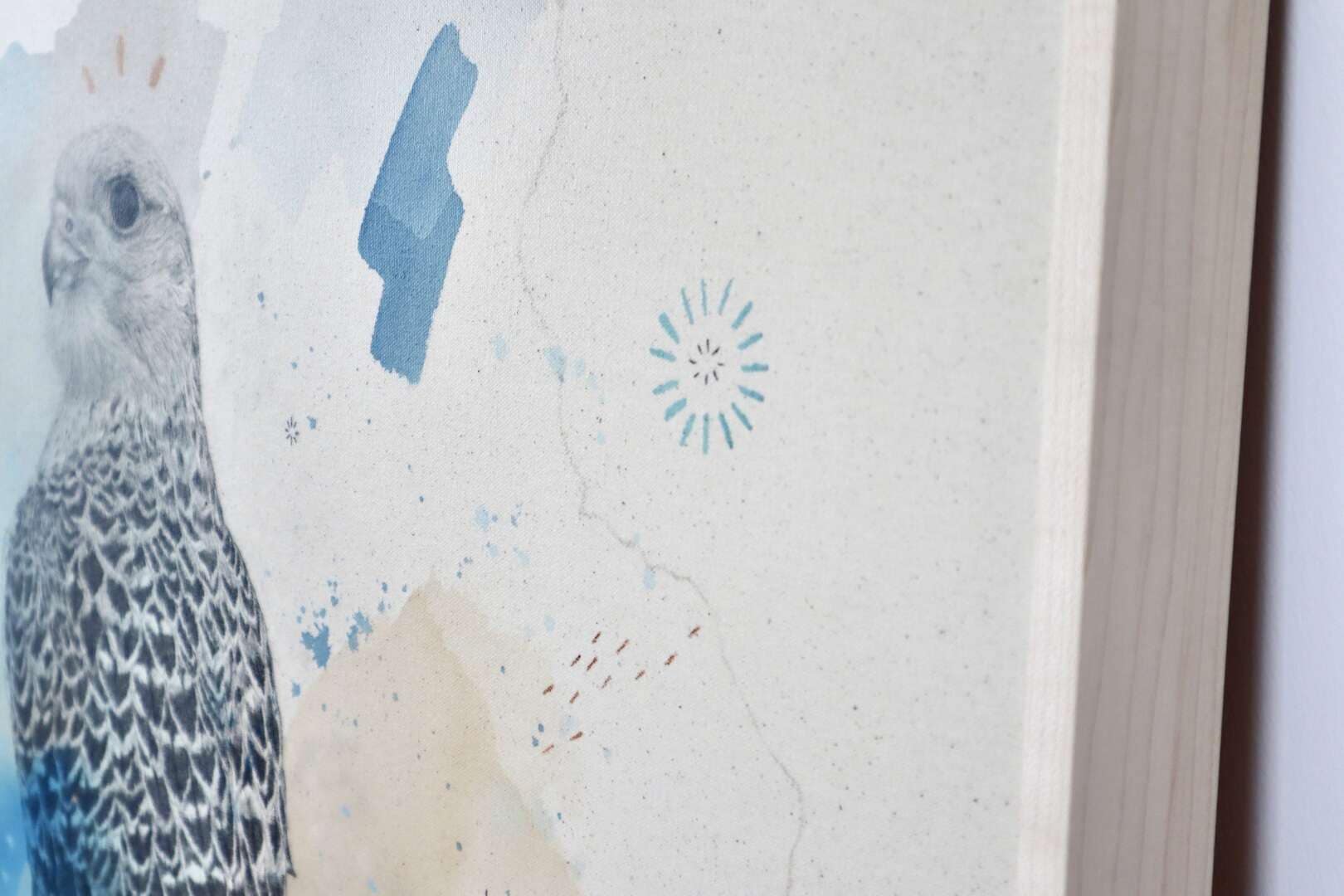
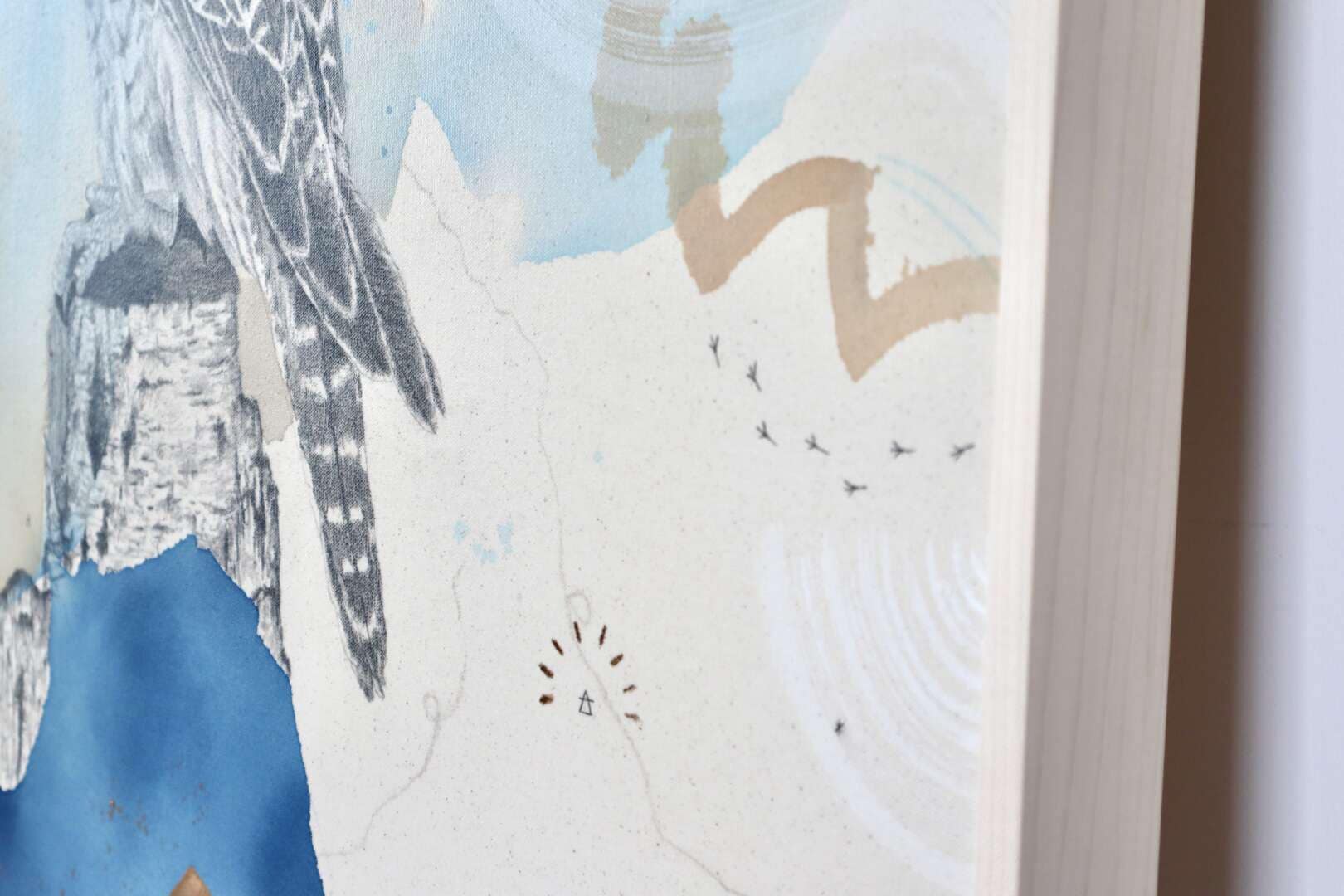
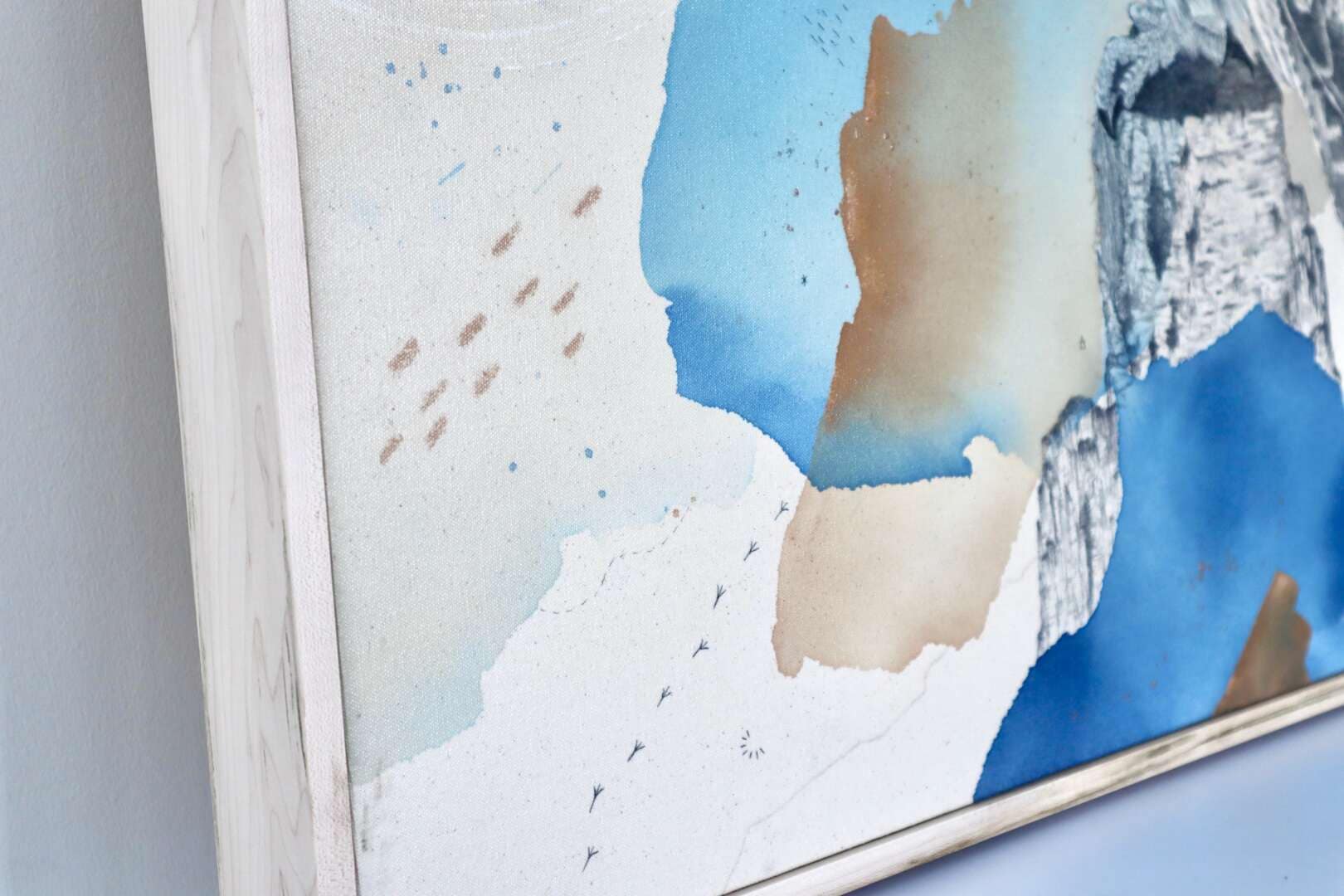
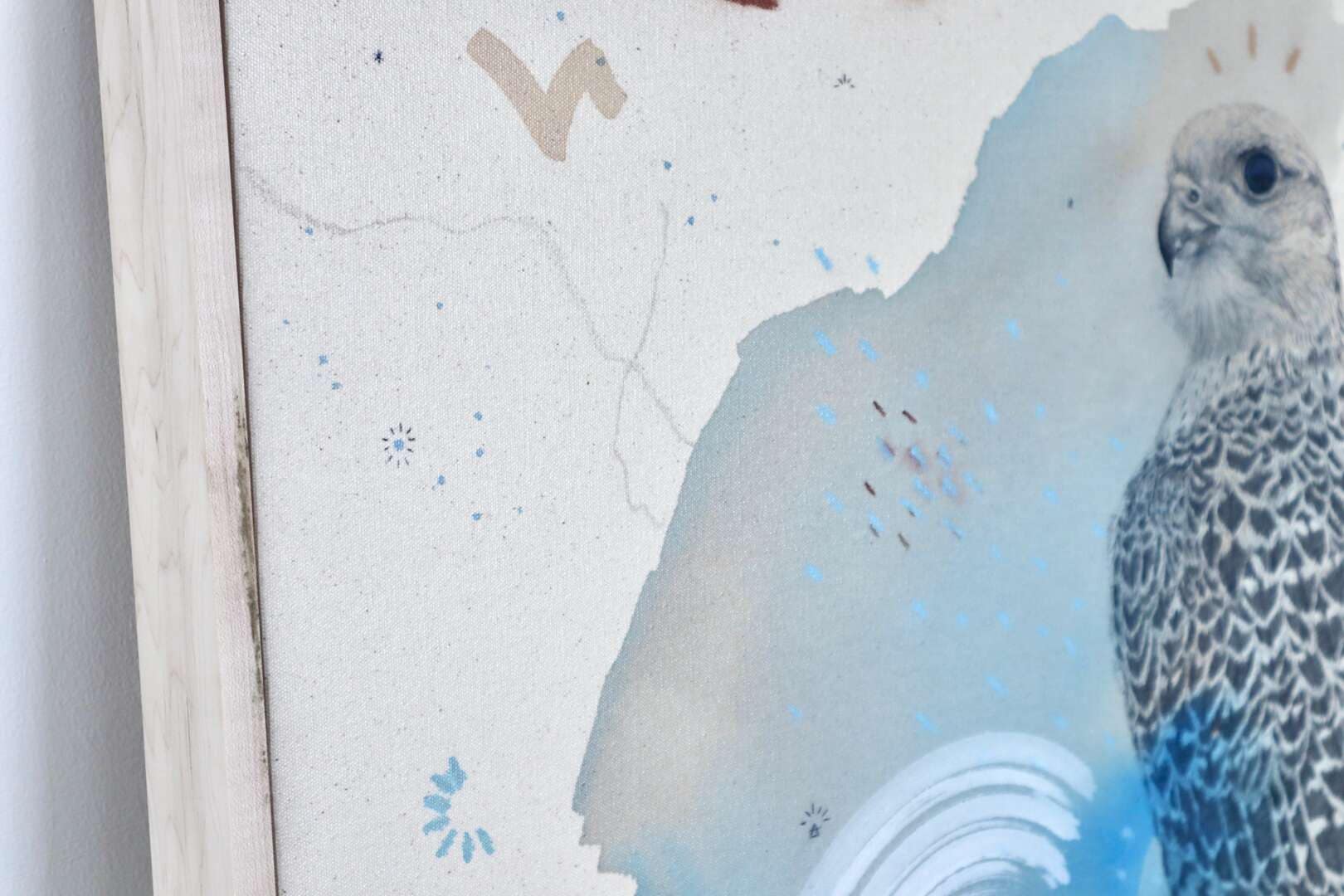
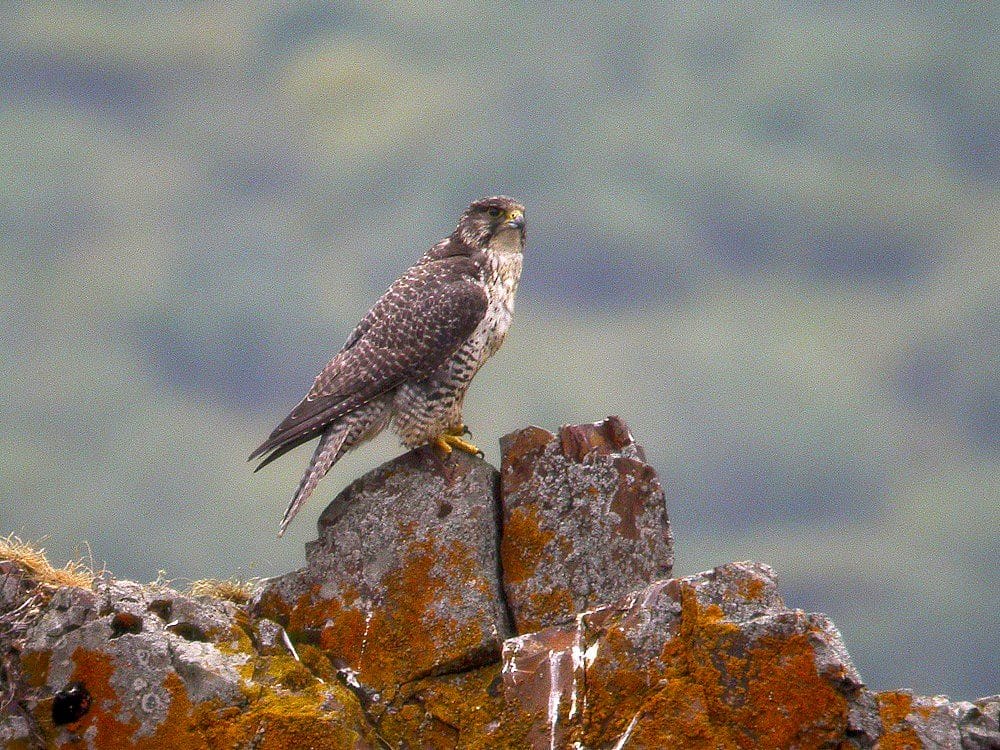
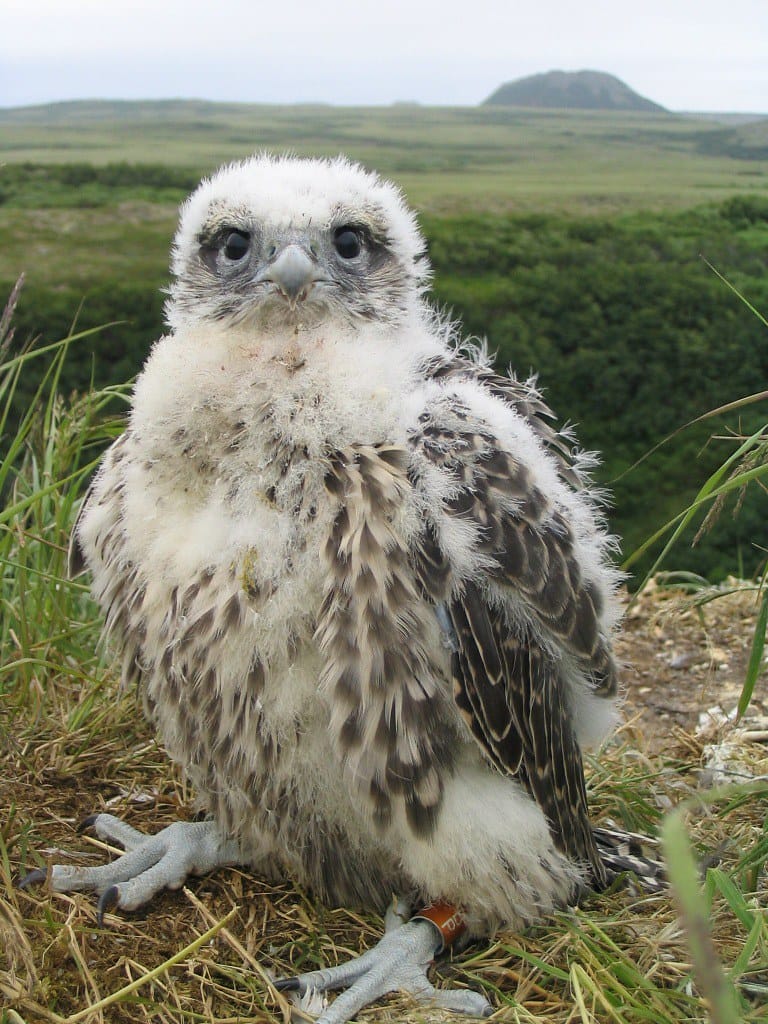
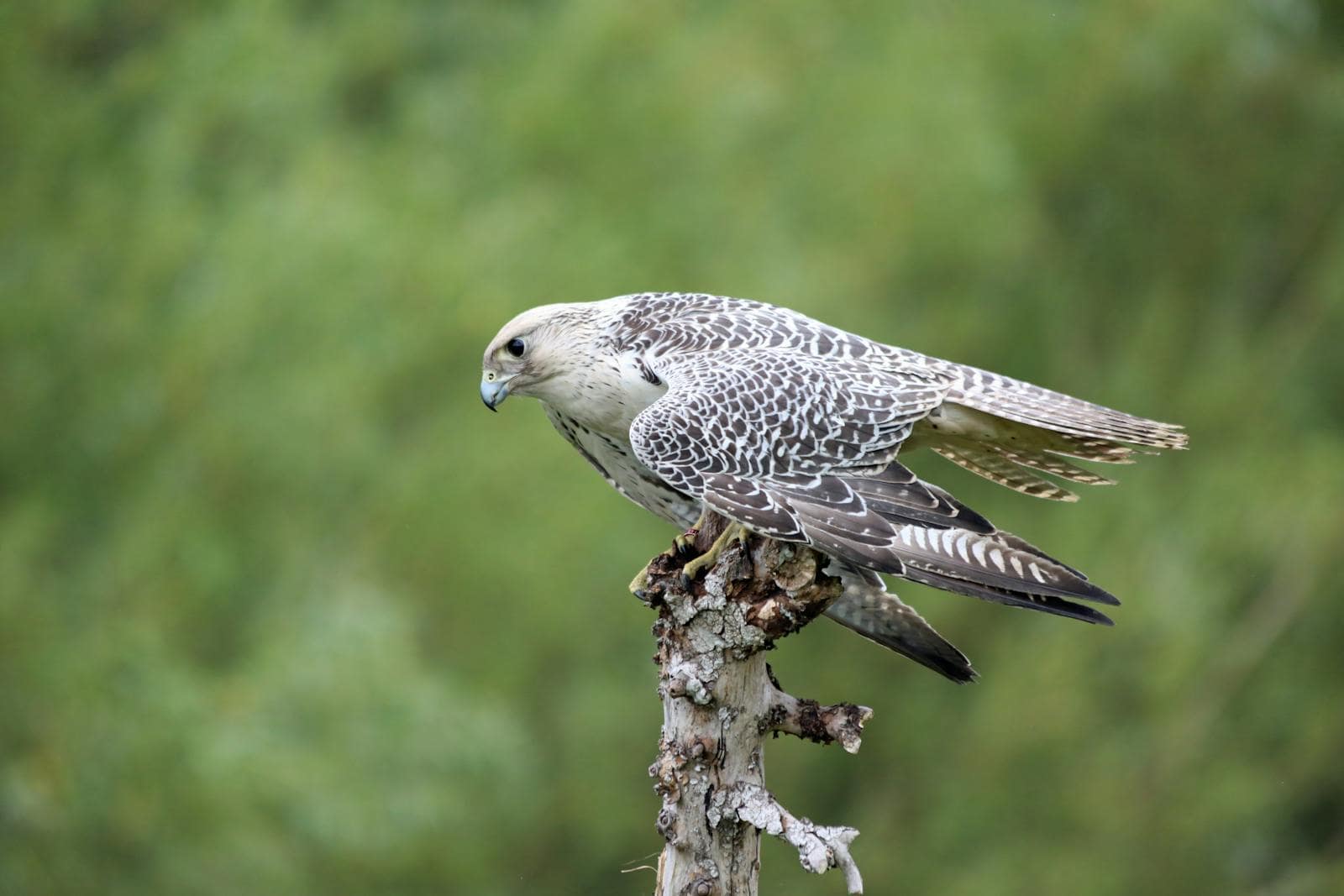
“Gyrfalcon, a King of Kings’ Companions”
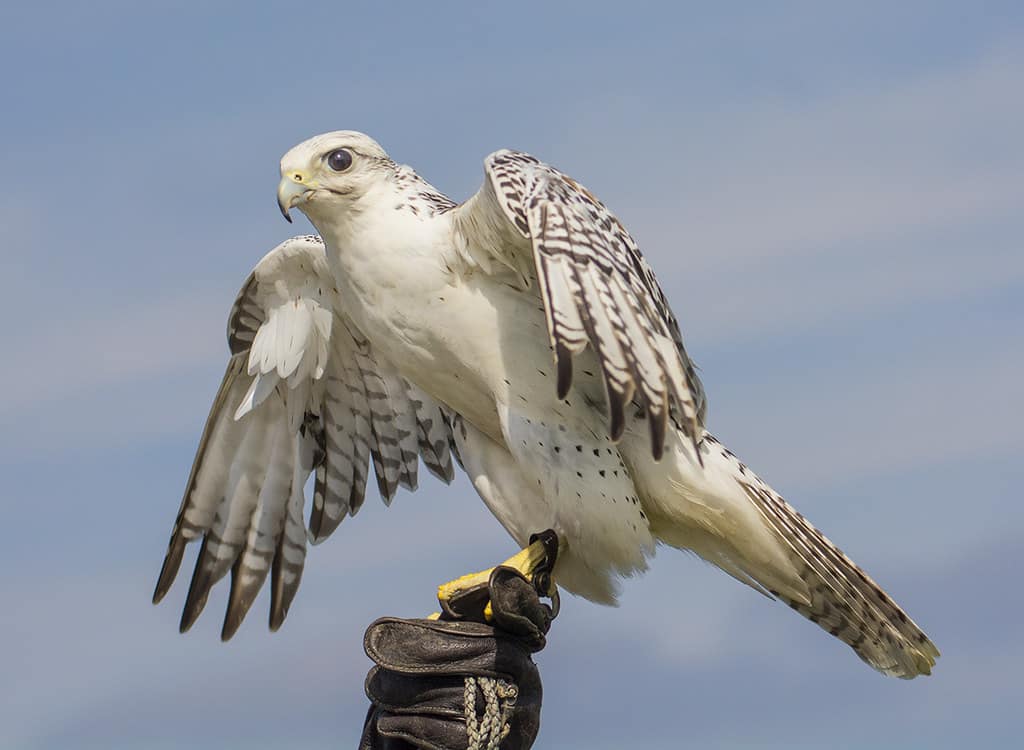
Was that a ghost? To meet this fierce bird, we fly north to the tundra and taiga. The largest falcon in the world, the ghostly Gyrfalcon is a fierce predator in the High Arctic, where it chases down ptarmigans in flight or plummets from the sky at breathtaking speeds to strike prey to the ground. Nesting on remote cliffs in the far reaches of Canada and Alaska, Gyrfalcons in North America are safe from most human disturbance but face challenges from a warming climate. Because Gyrfalcons breed so far north, most people encounter them as rarities spotted during winter in the northernmost U.S. and southern Canada. In these areas, the birds seek tundra-like habitats, including plains, open agricultural land, and coastlines.
Fast facts:
- Gyrfalcon is pronounced “JER-falcon,” likely evolved from Old Norse/Germanic language. The name may also come from a Latin word meaning “sacred falcon,” perhaps because medieval falconers so admired them.
- Gyrfalcons are highly prized in falconry due to their power, intelligence, and determination, now a popular choice for both pure and hybrid forms for hunting game birds and waterfowl. Historically, they were used by royalty, given as gifts among nobles, and for a period of time, only kings were allowed to hunt quarry with Gyrfalcons.
- Gyrfalcons are the largest falcons in the world, though not quite the fastest–the Peregrine falcons wear that crown. Length is up to 25 inches, and wingspan is up to 48 inches!
- They have pointed wings, but they are not as pointed or as narrow as the wings of smaller falcons. The tail is relatively long. Their bodies are thick and powerful, particularly in females, which are substantially larger than males.
- It’s a good thing they hunt mostly ptarmigan in the high Arctic, because their Snowy Owl Arctic neighbors need to eat, too! They hunt primarily birds in open country, sometimes flying high and attacking from above, but more often approaching fast and low, hugging ground contours. They often perch on the ground.
- Gyrfalcons breed on arctic tundra. When they come south for winter, they look for similar habitat: open fields, coastlines, dunes, prairie, and shrubsteppe. In irruptive years, where prey are more scarce up north, they may come to the Northern Midwest!
Sources: Audubon Society and Cornell Lab of Ornithology
Original mixed media on raw stretched canvas with hard maple float frame.
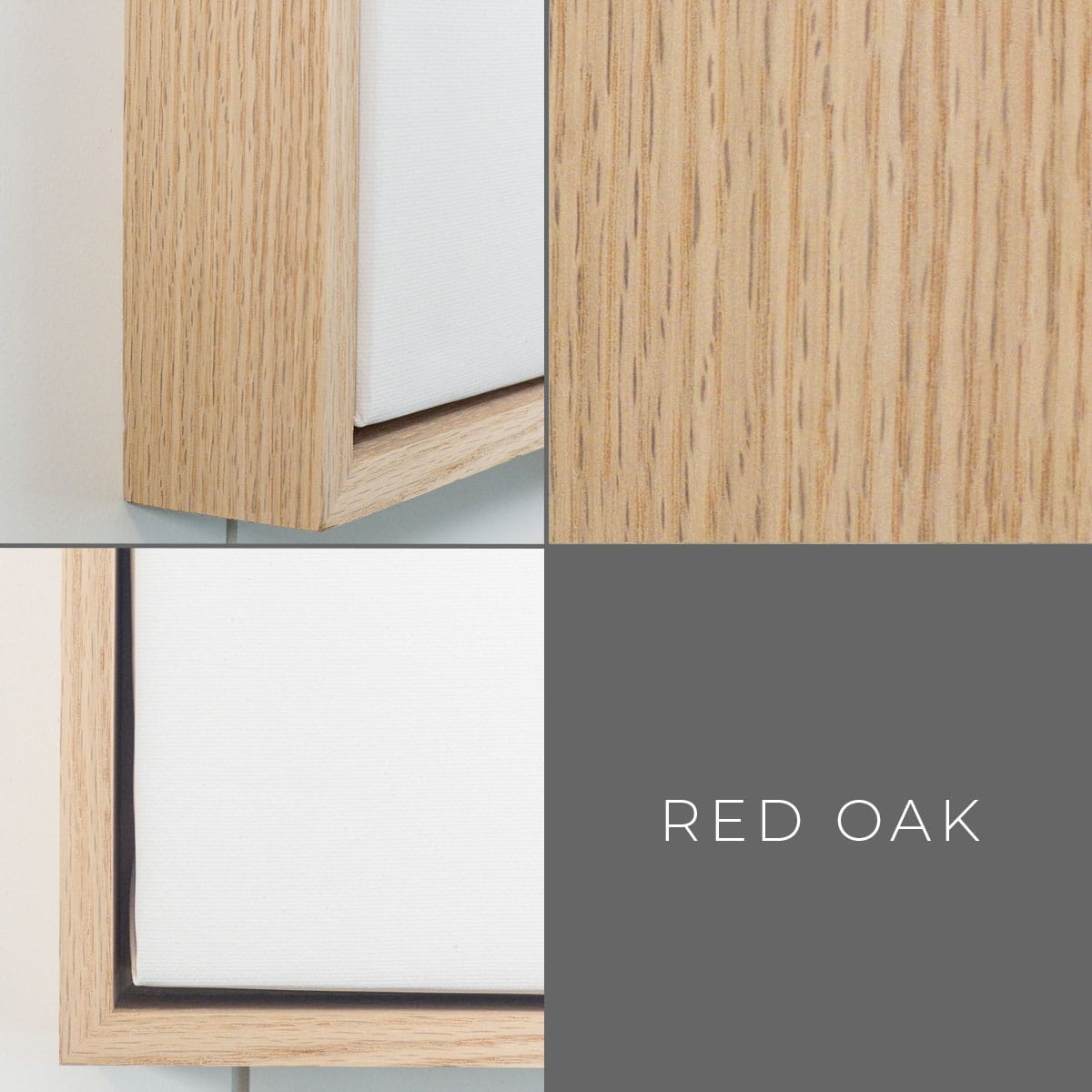
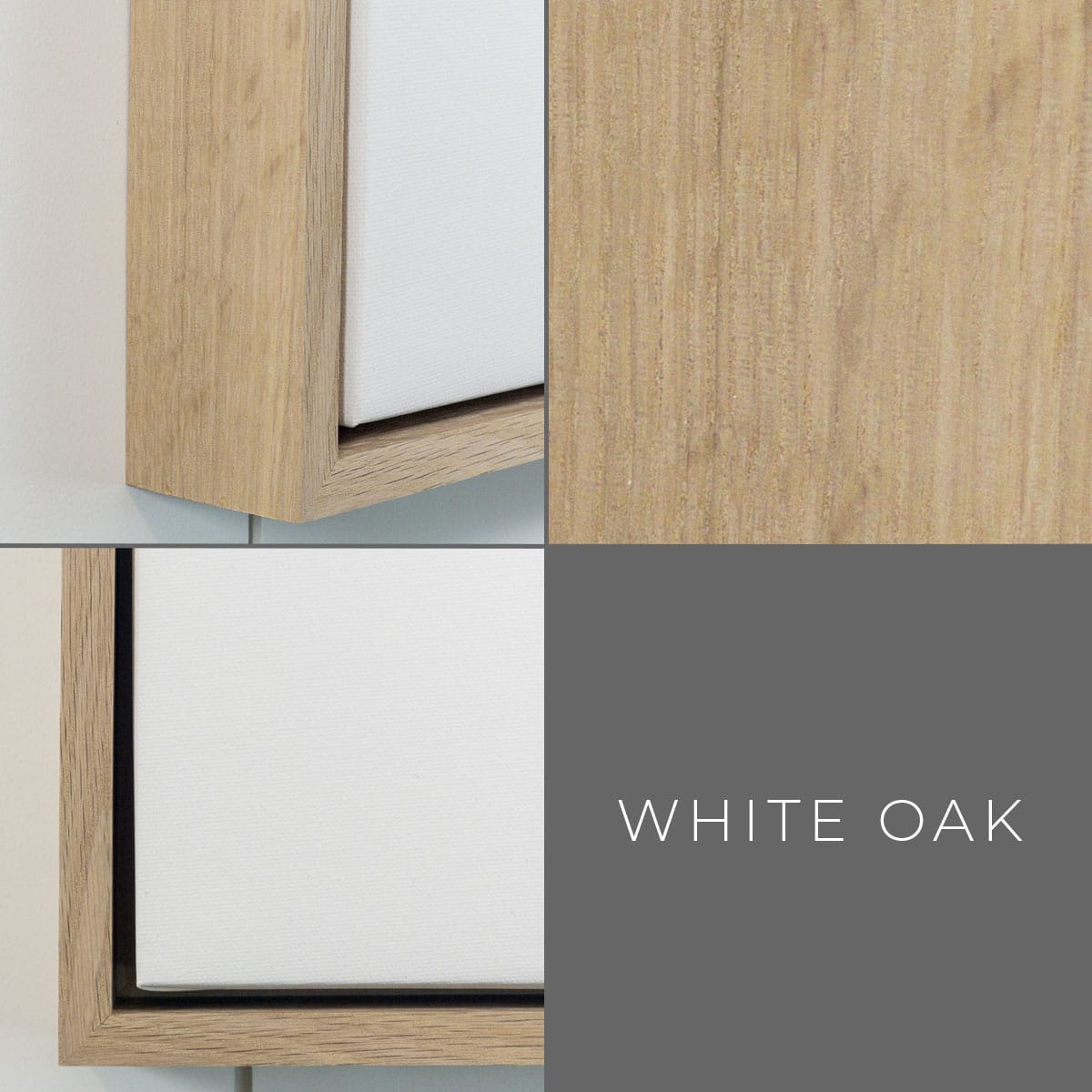
Alternative hardwood frame available upon request at no extra cost. Email with inquiries.
Frame Details: Framed in hard maple
Framed Size: 37x37x2.5(inches)
View Frame Options Gallery >
We offer hand made custom frames constructed from natural wood of your choice. Click on the photos below to open and preview the frame options.





All orders will be shipped in 3-10 business days via USPS Priority mail, UPS or FedEx, depending on the size of the item and whether framing was desired. For medium to larger works, and if crating is needed to safely ship, it will be UPS or FedEX. USPS can ship larger works but it is a lot more expensive!
If I anticipate framing will take longer for any reason, I will reach out and let you know! You will receive a tracking number via email once the work has shipped.
If you are in the Fargo-Moorhead area and wish to pick it up, please select STUDIOPICKUP at checkout. I will have a table in the front lobby with your piece labeled for pick-up between the hours of 8 AM and 5 PM. I will always try to say hello if I am in the studio!
Thank you for supporting a small business!
Shop My Artwork


Footer